
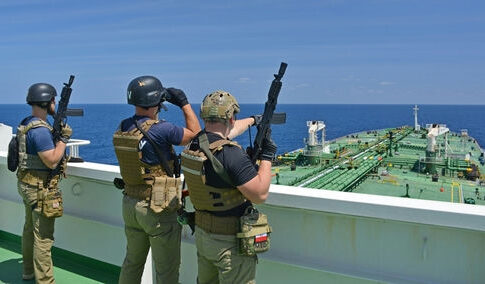
A dramatic new Pentagon video of U.S. commandos storming a massive oil tanker in the Indian Ocean is raising fresh questions about who really controls American power on the high seas — elected leaders, or an unaccountable security and sanctions machine.
Story Snapshot
- U.S. Indo-Pacific Command released video of American forces boarding the sanctioned, “stateless” supertanker MT Davina in the Indian Ocean.
- The ship has been under U.S. sanctions since 2024 for allegedly moving Iranian oil, but key legal and evidentiary details remain undisclosed.
- Open vessel data shows Davina with a national flag in recent years, raising unresolved questions about how and when it became “stateless.”
- The operation highlights how sanctions enforcement and military power can bypass normal transparency, feeding distrust of Washington’s permanent security establishment.
What the video shows — and what the Pentagon says happened
U.S. Indo-Pacific Command released video showing American forces boarding the giant oil tanker MT Davina during a nighttime maritime interdiction in the Indian Ocean on June 4, 2026.[1][5] The command described the action as a “maritime interdiction and right-of-visit boarding” of a “sanctioned stateless vessel” operating in its area of responsibility, presenting it as part of broader efforts to dismantle illicit networks that provide material support to Iran.[1][3][5] Officials did not disclose any information on arrests, injuries, or specific cargo seized during the operation.[1]
🇺🇸🛥️ The United States Indo-Pacific Command announced that U.S. forces conducted a maritime interdiction and right-of-visit boarding of the sanctioned tanker MT Davina in the Indian Ocean.
👥 According to officials, the vessel was operating without recognized nationality and has… pic.twitter.com/eyaOpZi5uQ
— THE INFORMANT (@TheInformantUSA) June 6, 2026
Follow‑up reports, citing U.S. military statements and ship‑tracking data, identify Davina as a supertanker capable of carrying up to two million barrels of crude oil.[2][3] The vessel was reportedly placed under United States sanctions in October 2024 for trading Iranian oil, with prior voyages said to involve deliveries from Iran to buyers such as China.[2][3] Contemporary coverage frames the boarding as at least the latest in a series of United States interdictions against Iran‑linked “shadow fleet” tankers in the region, extending Washington’s sanctions enforcement deeper into global shipping lanes.[3]
Sanctioned, “stateless,” and hard to independently verify
Public ship databases confirm the existence of an oil tanker named Davina with International Maritime Organization number 9746499, listing it as an oil products tanker built in 2014.[3] These platforms show the vessel sailing under the flag of Singapore, at least historically, and identify it as a large tanker consistent with media references to a supertanker.[3] At the same time, U.S. military statements and allied reporting describe the ship as “stateless” or “flagless,” meaning it was allegedly not legally registered to any country at the time of the boarding.[1][4][5]
That discrepancy—database records showing a national flag, versus official claims of statelessness—has not been fully explained in the public record.[1][3] It could reflect a change in registration after the last commercial update, a voided registry, or alleged deceptive flag practices associated with sanction‑evading “shadow fleet” tankers, but no underlying registry documents have been released to confirm the status on June 4.[1][3] Similarly, while the U.S. Treasury Department sanctioned Davina in 2024 as property involved in Iran’s oil and petrochemical sector, the evidentiary annexes and detailed designation materials have not been made public in this round of reporting.[2]
Missing facts: cargo, legal basis, and crew treatment
Despite the dramatic footage, the government has not released basic facts that would let the public independently assess whether Davina was actively violating sanctions at the moment of the boarding.[1][2][3] Available reporting does not include cargo manifests, chain‑of‑custody documentation, or detailed voyage data showing specific loading points or ship‑to‑ship transfers for this trip.[1][2][3] Some ship‑tracking sources state the tanker’s draft indicated it was heavily laden with oil off Sri Lanka just before the interdiction, but they do not specify the origin or legal status of that cargo.[2][3]
The same opacity surrounds the legal paperwork behind the operation. U.S. Indo-Pacific Command has cited a “right-of-visit” authority and sanctions enforcement against a stateless vessel supporting Iran, but has not released the underlying legal reviews, boarding orders, or flag‑state correspondence that would show how international maritime law was applied in this case.[1][3][5] There is also no publicly available information on how the crew was treated after the boarding, whether they were detained, or whether the ship was seized, redirected, or ultimately released.[1][2][4]
Why this matters to Americans across the political spectrum
For many Americans, especially those frustrated with decades of foreign interventions and deepening economic strain at home, Davina’s interdiction will look like another example of the security state acting first and explaining later. Conservatives who worry about endless overseas commitments and the growth of a permanent national security bureaucracy may see in this operation a pattern: powerful commands and sanctions offices shaping global commerce with limited Congressional debate or public scrutiny.[3] Liberals skeptical of corporate and geopolitical interests may question whose energy markets and financial systems ultimately benefit from aggressive policing of oil flows far from U.S. shores.[3]
Both groups share a deeper concern: a federal government that routinely withholds key documents, cites classified evidence, and expects citizens simply to trust that far‑reaching actions are lawful and necessary. In Davina’s case, the government has released gripping imagery and confident labels—“sanctioned,” “stateless,” “Iran‑linked”—but not the registry files, ownership records, or full sanctions evidence needed to independently verify those claims.[1][2][3] That imbalance between spectacle and transparency reinforces the sense that critical decisions are increasingly made by a small circle of unelected officials who operate beyond effective public oversight.
Sources:
[1] Web – Newly released video by U.S. Indo-Pacific Command shows American …
[2] Web – US forces board sanctioned tanker MT Davina in Indian Ocean
[3] Web – Watch: US Forces Board Oil Tanker Carrying Iranian Crude In Indian …
[4] Web – DAVINA (IMO 9746499), Oil Products Tanker | Position & specs
[5] Web – Licensable picture: US forces board sanctioned tanker Davina