
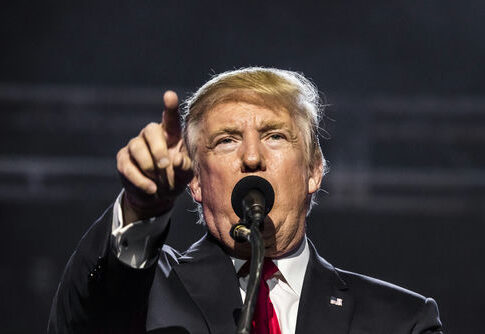
A housing regulator with no public intelligence background is now America’s acting intelligence chief while keeping his day job—another reminder to many that powerful posts are treated like political chess pieces, not sacred trusts.
Story Snapshot
- President Donald Trump named Federal Housing Finance Agency Director Bill Pulte as acting Director of National Intelligence after Tulsi Gabbard’s exit [1][2].
- Pulte will continue running oversight of Fannie Mae and Freddie Mac while leading the intelligence community on an acting basis [2][3][5].
- Supporters cite his experience managing large, sensitive portfolios; critics question his lack of national-security credentials [1][2][3].
- The move fits a broader pattern of using acting appointments to bypass confirmation delays and test loyalty in senior roles [1][2][10].
What Happened And Who Is Involved
President Donald Trump appointed Bill Pulte, the confirmed head of the Federal Housing Finance Agency, to serve as acting Director of National Intelligence following Tulsi Gabbard’s resignation, according to multiple outlets [1][2]. Reporting states Pulte currently oversees the government-sponsored enterprises Fannie Mae and Freddie Mac at the housing agency, responsibilities that Trump allies cast as evidence of large-scale risk management experience [2][3][9][10]. The Federal Housing Finance Agency’s leadership page lists William J. Pulte as director, confirming his standing role at the agency [7].
Coverage indicates Pulte will keep his housing role while serving as acting intelligence chief, creating an unusual dual-hat arrangement atop two critical federal portfolios [2][3][5]. Axios described the plan for Pulte to divide time between housing-finance oversight and the intelligence post while a permanent Director of National Intelligence is identified [3]. Cable and online reports further emphasize that Trump announced the decision directly and framed Pulte as a manager of highly sensitive national matters, including major financial exposures tied to housing [1][2][5].
Why This Choice Is Generating Heat
Critics argue Pulte lacks a national-security background and that his selection elevates a political ally over an intelligence professional, reflecting a pattern that worries both ideological camps about government competence [1][2][3]. Outlets note the absence of a public track record in intelligence for Pulte and highlight the optics of rewarding loyalty during a sensitive transition in the intelligence community [1][2]. Supporters counter that leading the Federal Housing Finance Agency involves complex, high-stakes oversight of the nation’s mortgage backbone, which they argue demonstrates executive capacity under pressure [2][3][9][10].
Skeptics also question the practicality of running two demanding operations at once. Reports describe Pulte’s continued leadership of the Federal Housing Finance Agency while simultaneously directing the nation’s intelligence apparatus, inviting concerns about bandwidth, conflicts, and crisis response if both domains face shocks concurrently [2][3][5]. While critics press those risks, available reporting does not cite documented operational failures from the dual-hat arrangement to date, underscoring that the immediate debate centers on suitability and precedent rather than proven breakdowns [2][3][5].
The Broader Pattern And What It Signals
Journalists and policy watchers place this decision within a recurring practice: presidents install acting leaders to move quickly, avoid confirmation battles, and test fit for politically sensitive roles [1][2][10]. In this view, Pulte’s appointment is less an anomaly than another data point in a governance model that prioritizes flexibility and loyalty at the potential cost of domain specialization. That trade-off has long frustrated both conservatives and liberals who see critical institutions staffed for political convenience rather than long-term mission strength [1][2][10].
Who Is Bill Pulte? Meet the 38-Year-Old Trump Pick Replacing Tulsi Gabbard as Acting DNIhttps://t.co/PvZfsLglfK
— The Kenya Times (@thekenyatimes) June 2, 2026
For readers concerned about an unresponsive federal establishment, the episode reinforces a shared worry: when the same small circle cycles through top jobs, accountability blurs and performance can suffer. Housing oversight directly affects mortgage costs and financial stability. Intelligence leadership shapes threat detection and crisis management. Combining both, even temporarily, concentrates responsibility in one unelected official who was confirmed for a different mission. Whether this accelerates decision-making or amplifies risk will be tested in real time [2][3][7][9].
What To Watch Next
Capitol Hill reactions, internal intelligence community acceptance, and any immediate changes to intelligence priorities will indicate how durable this appointment may be. Reporting suggests the administration will search for a permanent Director of National Intelligence, but the timeline remains unclear [3][5]. Observers should track whether the Federal Housing Finance Agency pauses or alters policy initiatives, and whether the intelligence community faces coordination hiccups, as early signs of strain or success in the dual-hat arrangement [2][3][5][9].
Sources:
[1] Web – BREAKING: President Trump announcing that Bill Pulte, the current …
[2] Web – Trump names Bill Pulte acting director of national intelligence
[3] Web – Who is Bill Pulte? Trump names acting DNI after Tulsi Gabbard resigned
[5] Web – Trump names FHFA’s Pulte acting director of national intelligence
[7] Web – Trump Nominates Bill Pulte as Director of the Federal Housing …
[9] Web – Bill Pulte – Wikipedia
[10] Web – What Bill Pulte Can Achieve as Federal Housing Finance Agency …